August 2026 | Industry News
California continues to expand its large-scale energy storage infrastructure as electricity demand grows and renewable energy becomes an increasingly important part of the state's power mix.
On August 12, 2026, Arevon Energy announced that its 300 MW / 1,200 MWh Nighthawk Energy Storage Project in Poway, California, had officially become operational. The project is one of the company's largest standalone battery energy storage facilities and represents another major step in the development of utility-scale battery storage in California.
A Large-Scale Battery Project for Grid Reliability
Located in Poway in the San Diego region, N
ighthawk is designed to store electricity when demand is lower and dispatch it when electricity demand increases.
With a rated power output of 300 MW and an energy storage capacity of 1,200 MWh, the project provides approximately four hours of storage at its rated output. Arevon states that the facility can provide enough electricity to power up to approximately 385,000 homes during periods of peak demand.
This operating profile is particularly relevant to California's evolving electricity system. Solar generation can produce substantial amounts of electricity during daylight hours, while electricity demand can remain high later in the day.
Large-scale battery storage can help shift available electricity from periods of lower demand to periods when the grid needs additional capacity.
Rather than serving simply as a backup resource, utility-scale BESS facilities are increasingly becoming an important part of the overall electricity infrastructure.
Lithium Iron Phosphate Battery Technology
Nighthawk uses lithium iron phosphate (LFP) battery technology, which is widely used in stationary energy storage applications because of its combination of energy performance, safety characteristics and expected service life.
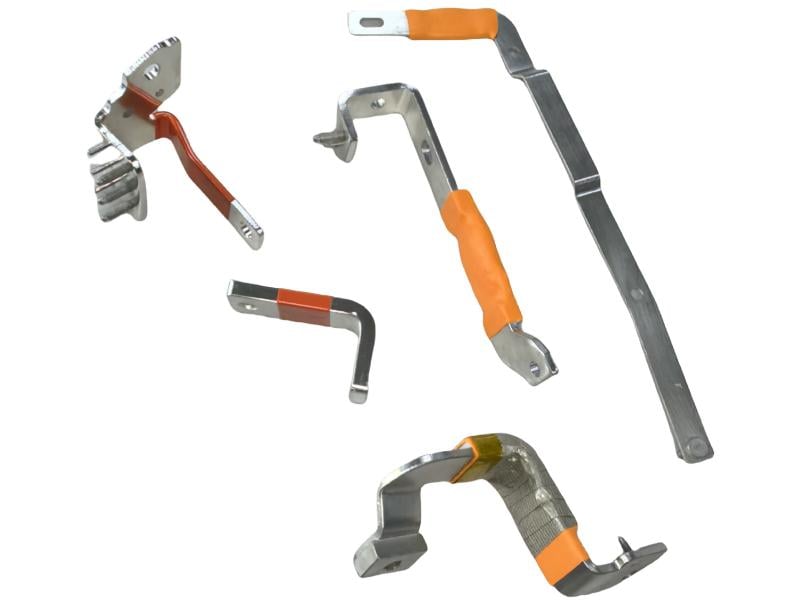
The selection of battery chemistry is only one part of a large-scale BESS project. A utility-scale installation also requires power conversion systems, transformers, switchgear, protection equipment, monitoring systems, thermal management and high-current electrical connections.
As projects become larger, the electrical infrastructure connecting battery modules, power conversion equipment and grid interconnection equipment becomes increasingly important to overall system performance.
From Construction to Commercial Operation
Nighthawk's development has progressed over several years.
Arevon began construction of the project in 2025, with the facility designed as a standalone battery storage system connected to the regional transmission infrastructure. At the time construction began, the project represented an estimated investment of approximately $600 million.
Earlier in March 2026, Arevon announced that it had closed a $920 million financing package associated with the Nighthawk project. The financing included debt, preferred equity and a tax credit transfer commitment.
The transition from construction to operation demonstrates the scale of investment now entering the U.S. battery storage sector.
It also highlights an important development for the wider energy storage supply chain: large BESS projects require not only battery cells and storage containers, but also a broad range of electrical and mechanical components that must operate reliably over many years.
Why High-Current Electrical Connections Matter
At the system level, a 300 MW energy storage facility represents a substantial electrical load and power flow.
Inside a BESS installation, electrical energy passes through multiple stages, including battery modules, DC collection systems, power conversion equipment and grid-side equipment. Each stage requires carefully engineered electrical connections.
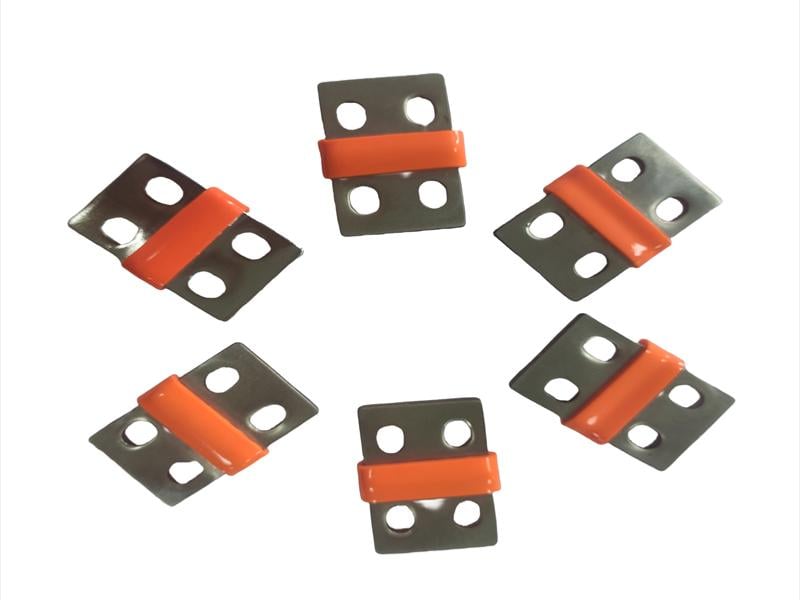
Busbars are commonly used where high current must be distributed within a compact and controlled electrical assembly.
Compared with conventional cable arrangements, appropriately designed busbars can provide a defined conductor geometry, consistent connection points and efficient use of available space. Depending on the application, copper or aluminum may be selected according to current requirements, weight, thermal performance and cost.
For higher-current assemblies, conductor cross-section, temperature rise, connection resistance and mechanical support all need to be considered during the design process.
Insulation and surface treatment can also become important depending on system voltage, environmental conditions and connection requirements.
Growing Demand for Customized BESS Components
The continued development of projects such as Nighthawk is creating opportunities for suppliers capable of supporting customized electrical components.
Utility-scale BESS projects are rarely identical. Battery container configuration, power ratings, inverter architecture, connection interfaces and available installation space can vary significantly between projects.
As a result, standard off-the-shelf conductors may not always provide the most efficient solution.
Custom busbars can be designed around specific battery layouts and connection interfaces. Depending on the application, solutions may include rigid copper busbars, aluminum busbars, flexible busbars or laminated busbar assemblies.
For manufacturers and system integrators, early engineering collaboration can help optimize conductor dimensions, hole patterns, bends, insulation and plating requirements before production begins.
California's Storage Market Continues to Develop
Nighthawk is part of a broader expansion of battery storage capacity in California.
The California Energy Commission has continued to approve and advance large-scale solar and battery storage projects, while utilities and developers are investing in storage to improve grid reliability and support greater integration of renewable electricity. For example, the CEC approved the 300 MW solar / 300 MW, 1,200 MWh storage Soda Mountain project in April 2026.
The completion of Nighthawk therefore represents more than the launch of an individual facility. It reflects the continued transition toward larger and more sophisticated energy storage infrastructure.
As renewable generation expands and electricity demand increases, battery storage is likely to play an increasingly important role in balancing supply and demand.
Kinto Engineering Perspective
At Kinto, we see the continued expansion of utility-scale BESS projects as an important driver for the development of custom high-current electrical components.
For large battery storage systems, busbar design needs to consider more than current capacity. Conductor geometry, thermal performance, connection interfaces, insulation, plating, mechanical strength and manufacturability all contribute to long-term system reliability.
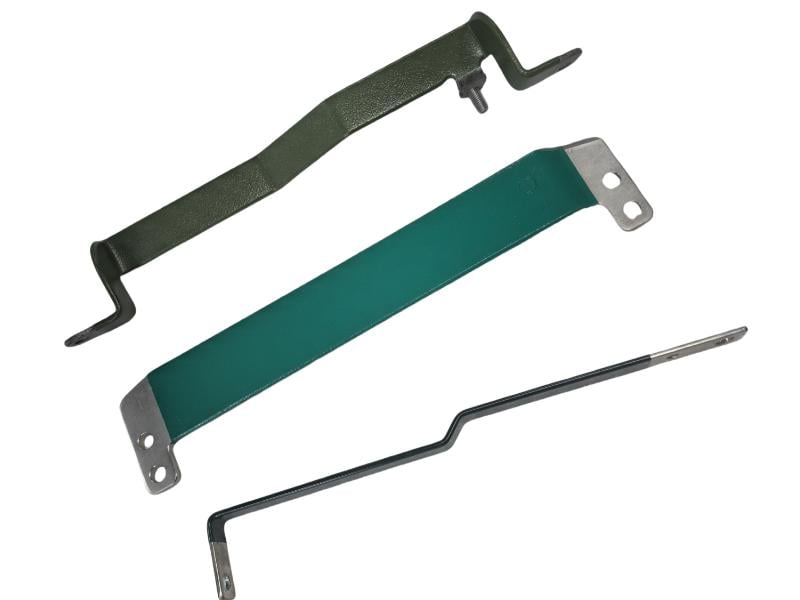
Kinto provides custom copper busbars, aluminum busbars, flexible busbars and laminated busbar solutions for energy storage and power distribution applications.
By working with customers from the early DFM stage, our engineering team can help evaluate conductor dimensions, connection structures, insulation requirements and manufacturing processes before production begins.
As projects such as Nighthawk demonstrate the continued growth of large-scale battery storage in the United States, Kinto will continue to support OEMs, system integrators and energy companies with reliable custom busbar solutions for next-generation energy infrastructure.
Copyright © Kinto Electric Co., Ltd All Rights Reserved
 EN
EN
 AR
AR
 BG
BG
 HR
HR
 CS
CS
 DA
DA
 NL
NL
 FI
FI
 FR
FR
 DE
DE
 EL
EL
 HI
HI
 IT
IT
 JA
JA
 KO
KO
 NO
NO
 PL
PL
 PT
PT
 RO
RO
 RU
RU
 ES
ES
 SV
SV
 CA
CA
 TL
TL
 IW
IW
 ID
ID
 LV
LV
 LT
LT
 SR
SR
 SK
SK
 UK
UK
 VI
VI
 SQ
SQ
 HU
HU
 TH
TH
 TR
TR
 FA
FA
 MS
MS
 GA
GA
 LA
LA