Introduction
Even well-designed electrical systems can experience overheating, excessive voltage drop, or premature connection failure if the busbar is not properly engineered. Many of these issues are not caused by material defects but by avoidable design mistakes made during the early development stage.
Understanding these common problems helps engineers improve product reliability while reducing manufacturing cost and project risk.
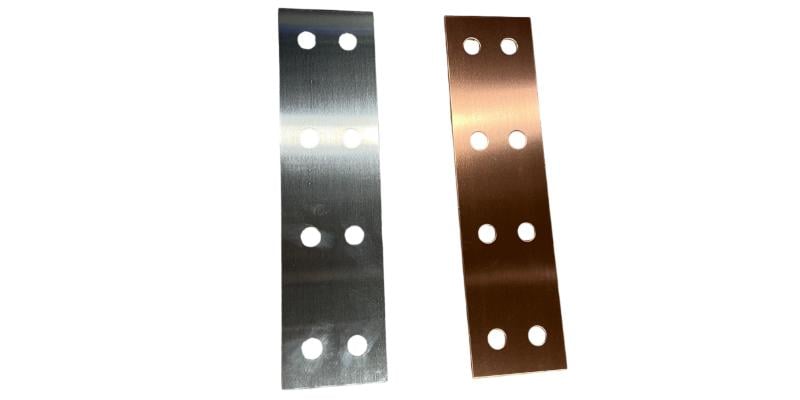
1. Selecting an Undersized Busbar
Choosing a busbar based only on current rating without considering temperature rise or installation conditions can lead to overheating and reduced service life.
Always evaluate conductor size together with ambient temperature, enclosure conditions, and cooling capability.
2. Ignoring Thermal Expansion
Copper and aluminum expand during operation.
Without sufficient flexibility or proper joint design, thermal expansion may introduce stress into terminals and electrical connections, especially during repeated charge and discharge cycles.
3. Overlooking Plating Requirements
Surface plating affects long-term contact resistance and corrosion performance.
Selecting tin, nickel, or silver plating should be based on operating environment, connection method, and expected service life rather than material cost alone.
4. Using Tight Bending Radii
Sharp bends may introduce excessive mechanical stress or reduce manufacturing consistency.
Busbar bend radius should always consider conductor thickness, material properties, and production capability.
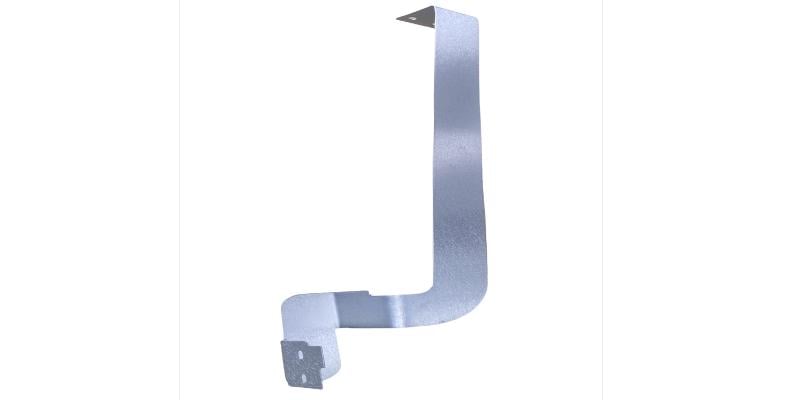
5. Ignoring Manufacturing Tolerances
Complex busbar assemblies often require tight positional accuracy.
Designs should account for practical manufacturing tolerances to ensure efficient assembly and consistent product quality.
Early DFM review helps identify potential issues before tooling is released.
6. Neglecting Installation Space
Busbars should never be designed in isolation.
Engineers should consider surrounding components, insulation requirements, creepage distance, and future maintenance access during layout development.
7. Waiting Too Long to Involve the Manufacturer
Many design problems can be solved before production begins.
Working with the manufacturing team during the design stage often reduces tooling complexity, shortens lead time, and lowers overall production cost.
Kinto Engineering Perspective
At Kinto, Design for Manufacturing (DFM) is an integral part of every custom busbar project. Our engineering team reviews drawings, materials, tolerances, bending geometry, plating requirements, and assembly methods before production begins, helping customers reduce manufacturing risk while improving product performance.
Early engineering collaboration enables smoother prototype development, faster production readiness, and more reliable mass manufacturing.
Copyright © Kinto Electric Co., Ltd All Rights Reserved
 EN
EN
 AR
AR
 BG
BG
 HR
HR
 CS
CS
 DA
DA
 NL
NL
 FI
FI
 FR
FR
 DE
DE
 EL
EL
 HI
HI
 IT
IT
 JA
JA
 KO
KO
 NO
NO
 PL
PL
 PT
PT
 RO
RO
 RU
RU
 ES
ES
 SV
SV
 CA
CA
 TL
TL
 IW
IW
 ID
ID
 LV
LV
 LT
LT
 SR
SR
 SK
SK
 UK
UK
 VI
VI
 SQ
SQ
 HU
HU
 TH
TH
 TR
TR
 FA
FA
 MS
MS
 GA
GA
 LA
LA