The Shift to 800V EV Architectures Is Reshaping Busbar Design
The global electric vehicle (EV) industry continues to evolve at an impressive pace. While vehicle sales remain one of the most closely watched indicators, another important trend is taking place behind the scenes: the rapid adoption of 800V battery platforms and higher-power electrical architectures.
Compared with traditional 400V systems, 800V platforms enable faster charging, lower current for the same power output, reduced cable weight, and improved overall vehicle efficiency. As leading automotive manufacturers continue introducing 800V models, battery pack design, power distribution systems, and electrical interconnection technologies are also undergoing significant changes.
Among these components, custom busbars are becoming increasingly important in supporting the higher electrical and thermal demands of next-generation EV platforms.
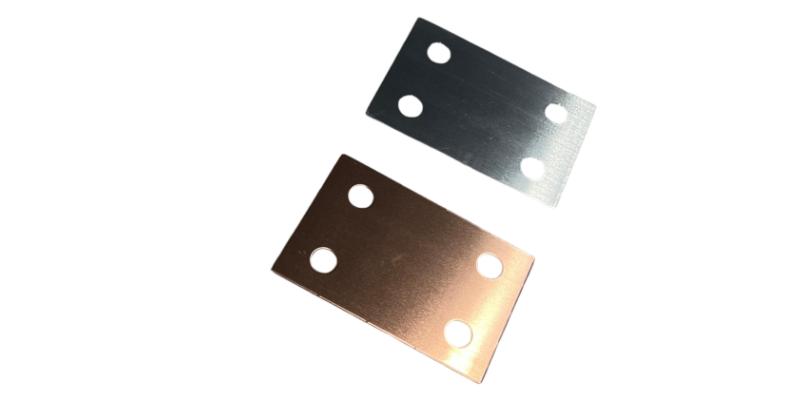
Higher Power Density Creates New Challenges for Busbar Design
As battery systems deliver more power within increasingly compact spaces, busbars must do much more than simply transfer electrical current.
Modern EV busbars are expected to provide:
High current-carrying capacity
●Low electrical resistance
●Excellent thermal performance
●Stable mechanical connections under vibration
●Compact installation within limited battery pack space
●Long-term reliability throughout the vehicle lifecycle
These requirements have accelerated the transition from conventional rigid conductors toward custom-engineered copper busbars, laminated busbars, and flexible busbar assemblies, each optimized for specific applications inside battery packs, inverters, and power distribution units.
Rather than selecting standard products, automotive OEMs increasingly require application-specific busbar solutions that integrate electrical performance, manufacturability, and cost optimization from the early design stage.
800V Platforms Are Driving New Manufacturing Requirements
The move toward higher-voltage battery systems affects not only electrical design but also manufacturing processes.
Busbars for 800V applications often require tighter dimensional tolerances, improved insulation systems, and carefully controlled surface treatments to ensure long-term reliability.
Engineers must consider multiple factors simultaneously, including:
●Current-carrying capacity
●Temperature rise
●Creepage and clearance distances
●Plating selection
●Mechanical vibration
●Assembly efficiency
●Production scalability
As battery packs become more integrated, many OEMs are also reducing the number of individual interconnects by using integrated laminated busbar assemblies, helping simplify production while improving electrical performance.
Supply Chain Expectations Continue to Increase
The rapid expansion of EV manufacturing has also changed expectations for component suppliers.
Automotive customers increasingly expect suppliers to provide more than manufacturing capacity. Early engineering involvement, Design for Manufacturing (DFM) support, rapid prototyping, and stable mass production have become key selection criteria.
Manufacturers capable of supporting prototype development, tooling optimization, quality validation, and volume production are better positioned to meet the growing demands of global EV programs.
At the same time, material price volatility—particularly for copper—continues to encourage manufacturers to optimize conductor geometry, material utilization, and production efficiency without compromising electrical performance.
Sustainability and Lightweight Design Remain Key Priorities
Reducing vehicle weight continues to be an important objective for EV manufacturers.
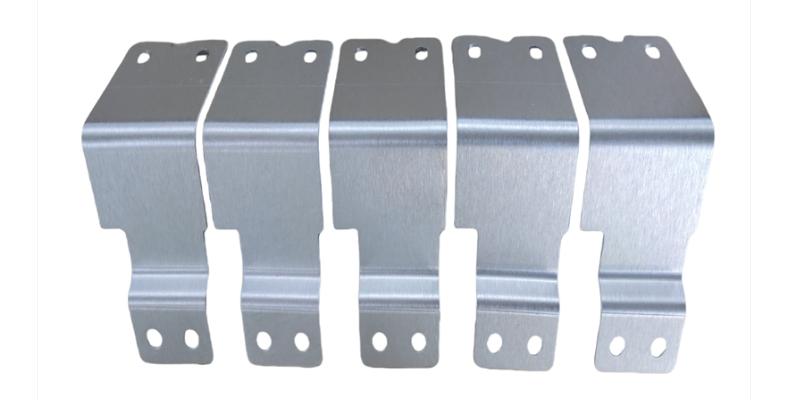
While copper remains the preferred material for high-current applications due to its excellent electrical conductivity, aluminum busbars are increasingly being evaluated for selected applications where weight reduction is critical.
Rather than replacing copper entirely, many manufacturers are adopting a balanced approach by selecting the most appropriate conductor material according to current requirements, mechanical strength, available installation space, and total system cost.
This trend highlights the growing importance of application-specific engineering rather than one-size-fits-all component selection.
Looking Ahead
Industry analysts expect global demand for EV battery systems, high-voltage power distribution components, and custom busbars to continue growing over the coming years as electrification expands across passenger vehicles, commercial transportation, energy storage, and industrial applications.
As electrical architectures continue evolving toward higher voltage, greater power density, and more compact packaging, busbar technology will remain an essential part of next-generation vehicle design.
Manufacturers that combine engineering expertise with advanced manufacturing capabilities will be increasingly well positioned to support these changing requirements.
Kinto Engineering Perspective
At Kinto, we see this industry transition not simply as an increase in production volume, but as a shift toward higher engineering requirements.
Today's EV customers expect busbar suppliers to contribute during the early stages of product development—not only through precision manufacturing, but also by providing DFM recommendations, material selection guidance, prototype support, and scalable production solutions.
Our engineering team works closely with customers to develop custom copper busbars, aluminum busbars, laminated busbars, and flexible busbar assemblies for EV battery packs, power distribution units, and energy storage systems. By combining precision manufacturing with quality management under ISO 9001 and IATF 16949, we help customers achieve the right balance between electrical performance, manufacturability, reliability, and cost.
As global EV technology continues to evolve, we remain committed to supporting OEMs and Tier suppliers with reliable custom busbar solutions designed for the next generation of electrified mobility.
Copyright © Kinto Electric Co., Ltd All Rights Reserved
 EN
EN
 AR
AR
 BG
BG
 HR
HR
 CS
CS
 DA
DA
 NL
NL
 FI
FI
 FR
FR
 DE
DE
 EL
EL
 HI
HI
 IT
IT
 JA
JA
 KO
KO
 NO
NO
 PL
PL
 PT
PT
 RO
RO
 RU
RU
 ES
ES
 SV
SV
 CA
CA
 TL
TL
 IW
IW
 ID
ID
 LV
LV
 LT
LT
 SR
SR
 SK
SK
 UK
UK
 VI
VI
 SQ
SQ
 HU
HU
 TH
TH
 TR
TR
 FA
FA
 MS
MS
 GA
GA
 LA
LA