EN
EN
 AR
AR
 BG
BG
 HR
HR
 CS
CS
 DA
DA
 NL
NL
 FI
FI
 FR
FR
 DE
DE
 EL
EL
 HI
HI
 IT
IT
 JA
JA
 KO
KO
 NO
NO
 PL
PL
 PT
PT
 RO
RO
 RU
RU
 ES
ES
 SV
SV
 CA
CA
 TL
TL
 IW
IW
 ID
ID
 LV
LV
 LT
LT
 SR
SR
 SK
SK
 UK
UK
 VI
VI
 SQ
SQ
 HU
HU
 TH
TH
 TR
TR
 FA
FA
 MS
MS
 GA
GA
 LA
LA

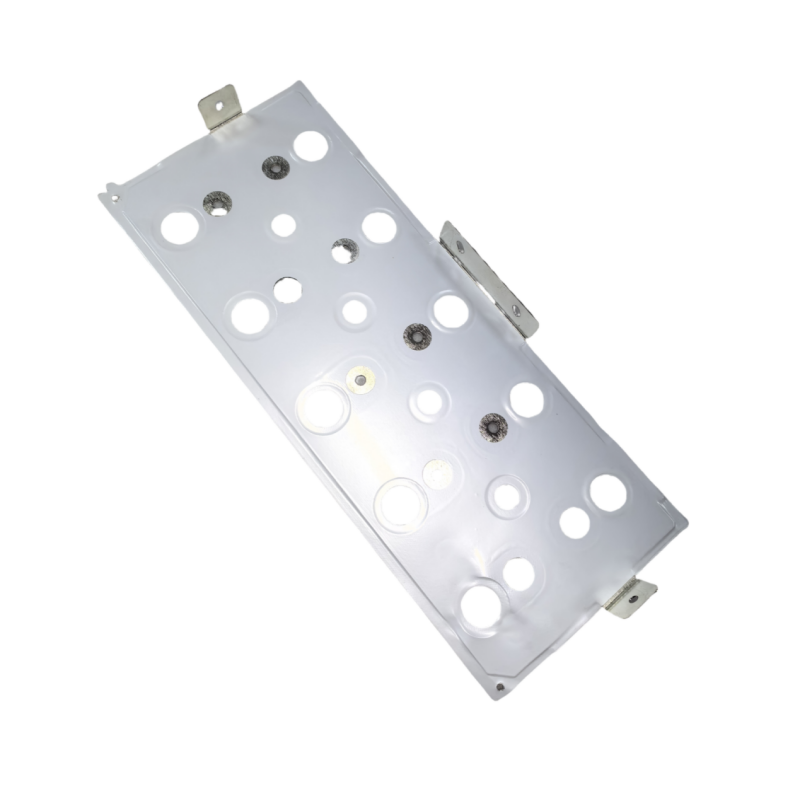
As electric vehicle powertrains become increasingly module-based, the physical arrangement of battery modules has become a major engineering challenge—where even a few millimeters count. Every current carrying path must be optimized not only for performance, but also for thermal behavior, mechanical integrity, and manufacturability. In this context, laminated busbars have evolved from a niche solution to a must-have design element for compact, high-performance battery modules. At Kinto, we have seen these benefits directly transform module designs, giving engineers more space to make their EVs more reliable and easier to assemble.
Superior Space Utilization Through Planar Current Routing
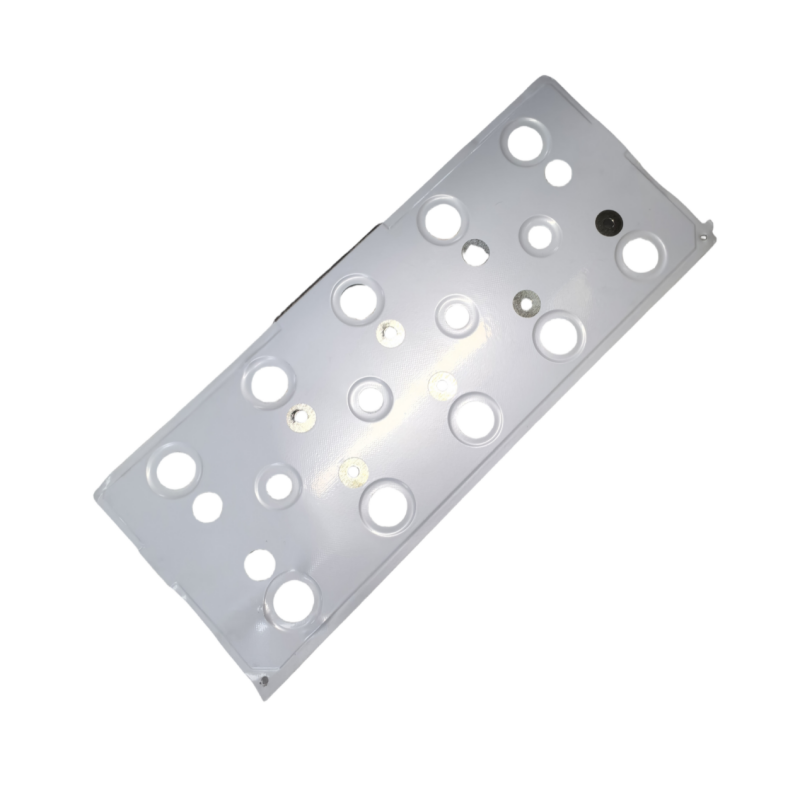
Perhaps the most striking advantage of a laminated busbar for use in space-constrained battery modules is the fact that it can often be used to replace both round cables and rigid round-rod conductors, opting instead for stacked parallel planar conductor strips. These laminated bus bar assemblies are manufactured as flat interconnect structures, whose plane and form can conform to tight module constraints, reducing system height or thickness for the same current carrying capability. A typical laminated busbar stack—consisting of alternately insulated conductive sheets(e.g., copper or aluminum)—can be formed around complex radii to match the internal profile of a battery module. This frees up volume that may otherwise be occupied by wiring and structural supports, allowing that space to be used for additional cells, thermal management, or electronic control modules. An added space saving advantage of a flat laminated bus bar design compared to a group of round cables is the ability to avoid accommodation factors, which arise with the need to keep round cables separated. Because the thickness is constant for each cell interconnection within a laminated bus bar stack, less spacing is required, allowing better overall packing within the battery module.
Enhanced Thermal Management and Current Carrying Capacity
Thermal performance is another significant criterion in compact module design as high-heat generated cells occur in dense layouts during rapid charging and discharging. The higher the surface-area-to-volume ratio of the busbar—achieved through thinner and wider conductor layers—the easier it is for heat to be dissipated via convection or conduction, especially when a module plate or casing surrounds the busbar. Similarly, a higher number of parallel layers that can be implemented through lamination means less total length is needed to provide sufficient cross-section for DC current flow - without additional horizontal space being used, or a substantial increase in resistance. Laminated busbars will thus generally feature a lower total DC resistance and help avoid hot spots caused by concentrated heating when bundles of cable are used during a period of rapid current.
Improved Electrical Performance with Low Inductance
The close proximity of high-current paths and fast-switching power semiconductors in a compact battery module can lead to vulnerability to voltage spikes and electromagnetic interference. Laminated busbars inherently overcome this issue through a low-inductance construction. As positive and negative conductors are laminated together over a large area, separated only by thin insulating sheets, their respective magnetic fields offset one another, creating a self-shielding property that dramatically reduces stray inductance of the interconnection system. The reduced inductance results in clearer switching waveforms, lower DC-link capacitance overshoot and less insulation strain. The electrical stability offered by laminated busbars gives module layout designers a free hand to locate them in closer proximity to control circuitry and other sensitive electronic components to realize the smallest possible assembly.
Simplified Assembly and Streamlined Supply Chain
However, compact designs often involve intricate and labor-intensive assembly processes that slow manufacturing and are susceptible to human error. The laminated busbar helps overcome the assembly challenges of the compact battery design by combining multiple interconnection points into a single, rigid unit. Instead of attaching dozens of individual cables one by one using separate nuts, bolts or crimps, a properly designed laminate busbar can incorporate factory-installed studs, press-fit pins or laser-welded tabs to the battery terminals or cell tabs in a snap fit. This single component reduces fastening operations and eliminates the risk of crossed or loose connections, enabling mistake-proof assembly on high volume production lines. At Kinto, we collaborate directly with customers to implement alignment and polarization features on the busbar, ensuring correct installation even at extremely high production rates. A second benefit to this consolidation is the reduced parts count on the module assembly line, thus improving both inventory management and quality control for the manufacturer. Sourcing, controlling, stocking and performing quality checks on fewer integrated parts streamlines the entire process, shortens supply chains, and reduces time market—all in compliance with our IATF 16949 & ISO 9001 certifications.
Conclusion
To satisfy the demands of increasingly compact EV battery modules without sacrificing electrical capacity or thermal performance and to enable simplified assembly in highly confined spaces while providing electrical performance equivalent to a cable harness but with far superior heat transfer characteristics. Laminated Busbars solve competing needs by offering space-saving planar routing, improved thermal transfer and low-inductive electrical design with simplified connection that streamline module assembly. Early utilization of Laminated Busbars as part of the initial module layout enables engineers to integrate highest energy density in their battery modules. Kinto optimizes our Laminated Busbars with high precision machining and continuous quality checks. Laminated Busbars are an excellent solution for the design of compact electric vehicle battery modules.