EN
 AR
 BG
 HR
 CS
 DA
 NL
 FI
 FR
 DE
 EL
 HI
 IT
 JA
 KO
 NO
 PL
 PT
 RO
 RU
 ES
 SV
 CA
 TL
 IW
 ID
 LV
 LT
 SR
 SK
 UK
 VI
 SQ
 HU
 TH
 TR
 FA
 MS
 GA
 LA

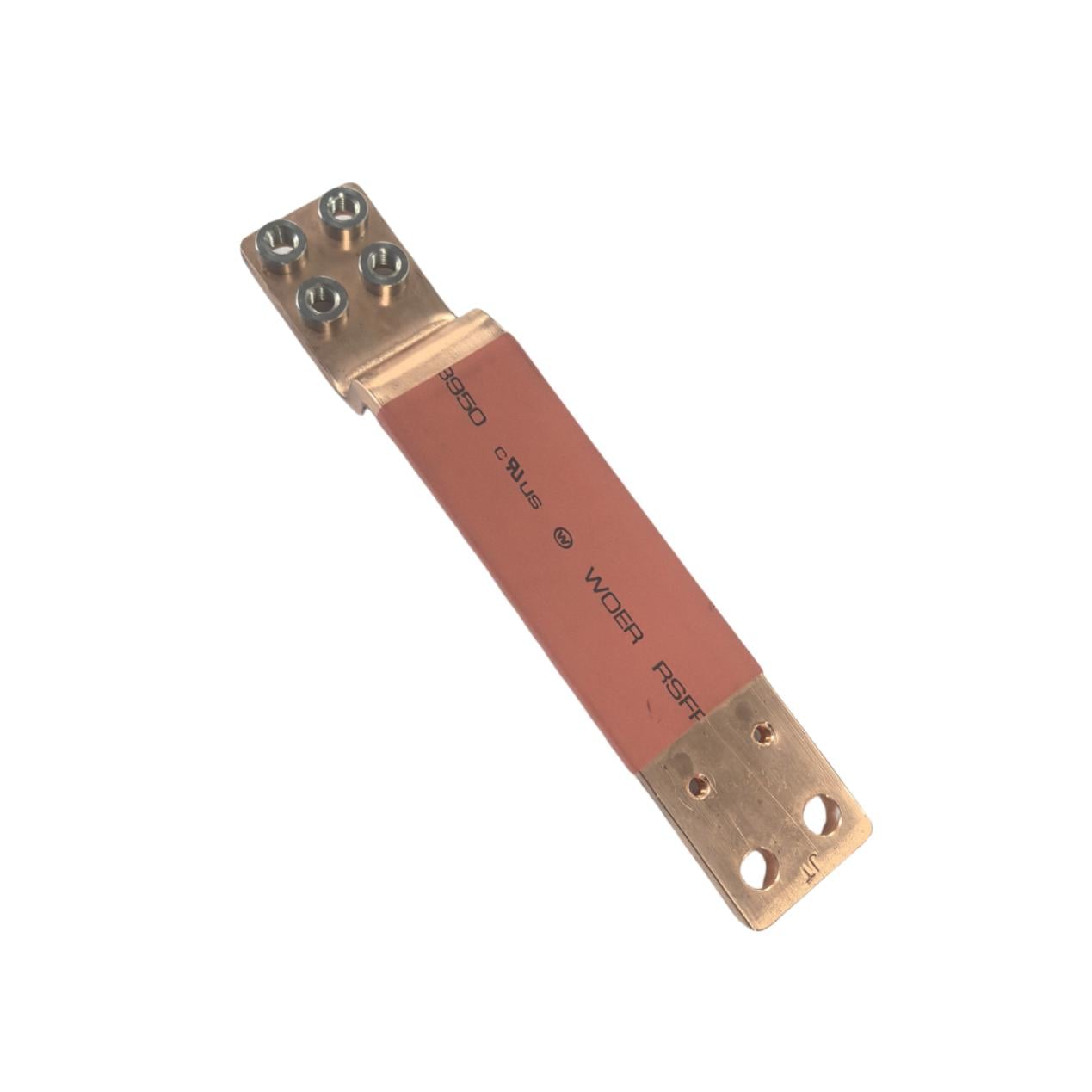
Electric vehicles (EVs) require reliable electrical connections that can handle high currents within limited space. Busbars play a critical role in connecting battery modules, power electronics, inverters, and high-voltage distribution systems.
With more than 20 years of busbar manufacturing experience, Kinto Electric supports custom busbar production for EV and energy storage applications. A well-planned design for manufacturing (DFM) review helps identify production challenges early, improve manufacturability, and prepare components for mass production.
1. Key Applications of EV Busbars
Busbars are widely used in EV battery packs, power distribution units, inverter connections, and other high-voltage systems.
Compared with cable assemblies, busbars can provide a more compact and repeatable connection solution where space, current capacity, and installation layout favor rigid or laminated conductors. Their geometry, electrical resistance, and contact interfaces also affect current distribution and heat generation.
Busbar design should therefore consider not only electrical performance but also packaging constraints, insulation requirements, and assembly conditions.
2. Optimize Geometry for Electrical and Thermal Performance
Custom EV busbar design requires balancing current capacity, temperature rise, available space, weight, and material cost.
A larger conductor cross-section generally reduces electrical resistance but increases material usage and weight. Designers should select suitable dimensions based on operating current, duty cycle, temperature limits, and installation space.
Optimizing width, thickness, bends, and contact areas can help manage current density and reduce localized heating. In parallel battery configurations, current distribution must also be evaluated alongside cell characteristics, connection resistance, and the overall electrical layout.
Manufacturing feasibility is equally important. Hole positions, bend radii, edge conditions, and contact surface flatness should be reviewed during DFM to reduce forming and assembly difficulties.
Depending on part geometry and production volume, CNC machining, stamping, or forming may be appropriate. Early collaboration between the customer and manufacturer helps identify a practical process for the required tolerances and cost targets.
3. Select the Right Material and Surface Finish
Copper and aluminum are both used in EV busbars, but each offers different advantages.
• Copper: Higher electrical conductivity, suitable for compact designs where low resistance is important.
• Aluminum: Lower weight, but generally requires a larger cross-section to achieve comparable electrical resistance.
The final material choice should consider current requirements, temperature rise, packaging space, weight targets, joining methods, and cost.
Surface finish is another important consideration. Tin, nickel, and silver plating offer different characteristics depending on contact resistance, corrosion exposure, wear, and compatibility with mating terminals.
• Tin plating is commonly used for electrical connections requiring corrosion protection and compatibility with tin-finished contacts.
• Nickel plating can provide a durable barrier layer and good wear resistance in suitable applications.
• Silver plating offers high electrical conductivity and may be suitable for demanding contact interfaces where low contact resistance is important.
For plated busbars, coating thickness and edge coverage should be specified according to the application. For bolted connections, surface finish and friction should also be considered when determining tightening requirements.
4. Design for Quality Verification
A manufacturable busbar must also be easy to inspect. Important characteristics may include overall dimensions, hole positions, flatness, bend angles, burrs, plating thickness, and insulation coverage.
Well-defined inspection datums help establish consistent measurement references. Depending on the component and tolerance requirements, inspection may involve optical measurement, dedicated gauges, or coordinate measuring machines (CMMs).
Rounded edges and proper deburring can help improve insulation coverage and reduce localized electric-field concentration. However, dielectric performance also depends on insulation thickness, clearance, creepage distance, and operating voltage.
Inspection and validation requirements should be established early in the DFM process. Depending on the project, verification may include first article inspection, dimensional checks, electrical resistance testing, or temperature-rise testing.
5. Integrate DFM from Prototype to Mass Production
Effective DFM connects design requirements with material selection, manufacturing processes, surface treatment, and quality control.
For EV busbars, an early review should focus on four areas:
• Electrical and thermal performance: Check conductor dimensions against operating requirements.
• Material and plating: Select suitable materials and surface finishes for the application.
• Manufacturing feasibility: Review bends, holes, tolerances, edges, and insulation.
• Quality verification: Define critical dimensions, inspection methods, and acceptance criteria.
Addressing these factors early can help reduce avoidable manufacturing issues and support a smoother transition from prototype to mass production.
Conclusion
Successful EV busbar design requires a balance between electrical performance, thermal behavior, packaging constraints, and manufacturing feasibility. By optimizing geometry, selecting suitable materials and plating, and planning inspection requirements early, manufacturers can develop busbars that are both functional and production-ready.
Kinto Electric provides custom busbar manufacturing support for EV, energy storage, and industrial applications. Our team can review customer drawings and manufacturing requirements to identify potential production challenges and support the development of practical manufacturing solutions.
Looking for a custom EV busbar manufacturer? Contact Kinto Electric to discuss your drawings and project requirements.
The advent of electric vehicles is actually transforming just about every piece of hardware under the hood, and the busbar, while usually silent and overlooked, plays one of the most vital roles. In an EV, that role actually expands beyond simple current conduction to include structural support, thermal management, and critical safety functions. Having spent nearly twenty years honing how busbars are made at Kinto – we have gone from basic extruded bars to highly-engineered components that meet the rigor of today’s powertrains. In this post, we will examine some key ways that busbars are utilized in electric vehicles and offer tips on design for manufacturing (DFM) strategies that will slash time-to-market while optimizing component and system performance.
The Central Role of Busbars in Electric Drive Systems
To move high currents with maximum efficiency, battery pack, power electronics, and drive motor in an EV all require high performance interconnection pathways. Where thick and less reliable cable harnesses are the only option, the busbar is the most promising alternative. They are mainly used in three areas: battery module interconnections, inverter-to-motor connections, and the high voltage power distribution box. Compared to cables, the optimized busbar will have low impedance, great heat dissipation capabilities, and very predictable inductance, all influencing an EV’s battery range and efficiency of charging and driving. Additionally, the busbar acts as thermal sink for high performance power modules, drawing unwanted heat away from semiconductors. We consider busbar as central part of EV’s thermal and electrical design, not simply some metal.
Optimize Geometry for Thermal and Electrical Balance
The primary trade-off in custom busbar design for vehicle applications is between cross-sectional area and available package space. Increasing the cross-section reduces current density but adds weight and material cost. Better compromise is to shape the busbar according to current density:widen it at high current points and narrow it where current stress is lower. Besides reducing material usage, this shaping also tailors resistance to balance current sharing among parallel battery cells. Kinto has ultra high precision machining centers which can reduce the need for dedicated tooling in suitable low-volume or prototype projects. Our engineers often recommend running current density simulations and then collaborating with our team to develop an optimal shape with optimized edge and hole geometries that ensure uniform clamping force and minimize contact resistance.
Select the Right Material and Coating Strategy
Copper and aluminum are both used in EV busbars, but each offers different advantages.
• Copper: Higher electrical conductivity, suitable for compact designs where low resistance is important.
• Aluminum: Lower weight, but generally requires a larger cross-section to achieve comparable electrical resistance.
The final material choice should consider current requirements, temperature rise, packaging space, weight targets, joining methods, and cost.
Surface finish is another important consideration. Tin, nickel, and silver plating offer different characteristics depending on contact resistance, corrosion exposure, wear, and compatibility with mating terminals.
• Tin plating is commonly used for electrical connections requiring corrosion protection and compatibility with tin-finished contacts.
• Nickel plating can provide a durable barrier layer and good wear resistance in suitable applications.
• Silver plating offers high electrical conductivity and may be suitable for demanding contact interfaces where low contact resistance is important.
For plated busbars, coating thickness and edge coverage should be specified according to the application. For bolted connections, surface finish and friction should also be considered when determining tightening requirements.
Design for In-Process Quality Verification
Arguably, the most overlooked DFM element in busbar design is inspection. On an electric busbar, this can mean checks for flatness, edge deburr height and hole positioning tolerance – all factors that can impact high potential and contact resistance. Simple solution is to include non contacting datum features – like specific hole patterns or machined reference surfaces that do not serve as electrical contacts – so that in-line visual inspection, optical metrology, or CMM can verify every part rapidly without slowing production. Another quality-critical design choice is the use of rounded edges rather than sharp 90-degree sharp corners. Rounded edges provide higher dielectric strength, simplify deburring and coating, and improve in-line optical inspection reliability. Our policy on quality improvement encourages inspection datums for improved manufacturing, and our experience is that using parts with built-in datum references for inspection reduces deviations downstream by around 40%. By proactively planning for in-line measurement with us in the initial design process, you can transition your busbar smoothly and confidently from prototype to mass-volume production.
This isn’t all about getting certificate at Kinto; it’s about practical application in factory. By applying these four key DFM principles-thermal and geometric optimization, material and coating selection, and robust inspection datums, you can fast-track your next EV project while enhancing performance. Take the opportunity to ultra unique, hyper-precise facilities of our fabrication centers and convert your custom busbar requests into production-ready manufacturing solution. After all, in the rapidly evolving realm of EVs, the right optimized busbar could very well be all the difference between good and greatness.
Table of Contents
- 1. Key Applications of EV Busbars
- 2. Optimize Geometry for Electrical and Thermal Performance
- 3. Select the Right Material and Surface Finish
- 4. Design for Quality Verification
- 5. Integrate DFM from Prototype to Mass Production
- Conclusion
- The Central Role of Busbars in Electric Drive Systems
- Optimize Geometry for Thermal and Electrical Balance
- Select the Right Material and Coating Strategy
- Design for In-Process Quality Verification