EN
EN
 AR
AR
 BG
BG
 HR
HR
 CS
CS
 DA
DA
 NL
NL
 FI
FI
 FR
FR
 DE
DE
 EL
EL
 HI
HI
 IT
IT
 JA
JA
 KO
KO
 NO
NO
 PL
PL
 PT
PT
 RO
RO
 RU
RU
 ES
ES
 SV
SV
 CA
CA
 TL
TL
 IW
IW
 ID
ID
 LV
LV
 LT
LT
 SR
SR
 SK
SK
 UK
UK
 VI
VI
 SQ
SQ
 HU
HU
 TH
TH
 TR
TR
 FA
FA
 MS
MS
 GA
GA
 LA
LA

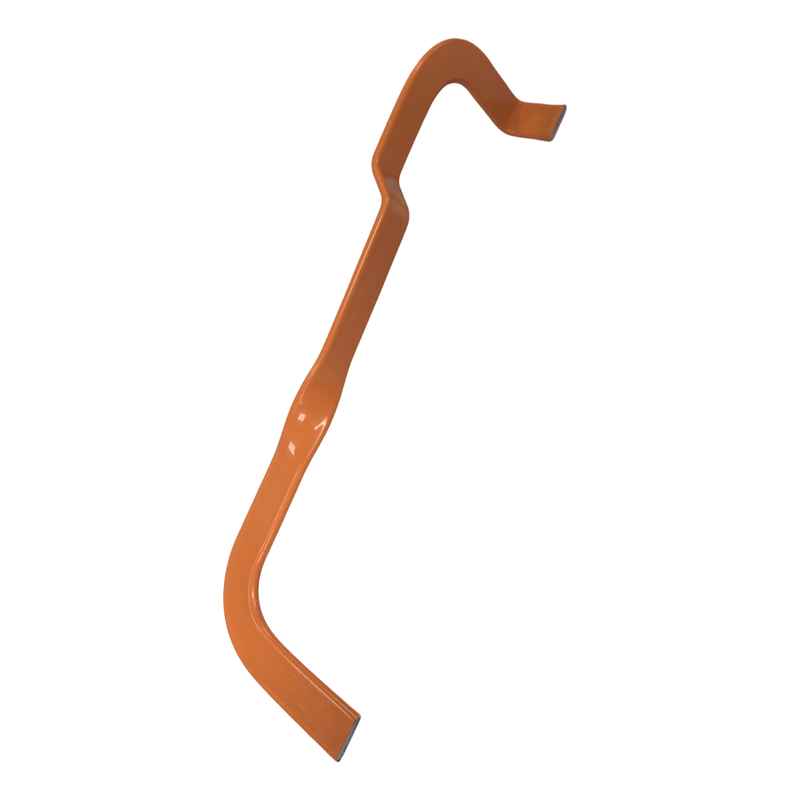
Electric Vehicles and Energy Storage continue to play a vital role in shaping the future of energy. Their growing acceptance and demand make it necessary to engineer efficient and reliable components that manage power delivery with ease. Among them is a very simple yet fundamental component, the busbar which acts as a bridge to deliver the electric current among various functions within a power distribution unit, inverter, or battery pack. Kinto has dedicated nearly two decades to perfecting busbars for these precise demanding application. Below guide walks you through different busbar types and their applications in EV and energy storage.
Rigid Copper and Aluminum busbars for High-Current Paths
These are common in EV battery packs, power conversion systems, and grid scale storage racks, where they are used as the primary current carriers. Copper’s high conductivity makes it ideal for compact design and helps mitigate heat generation. The lightweight property of aluminum and cost effectiveness make it perfect for electric vehicles where the weight needs to be considerably less. Kinto manufactures busbars made from copper and aluminum with the required precise flatness, edge finish, and dimensions. In grid-scale energy storage, they serve as the main connection to the batteries when linked in series or parallel which eventually leads to the high voltage backbone of the storage system. The mechanical rigidity of these busbars makes it the perfect choice when relatively little vibration is expected, and when thermal expansion is well managed by the system.
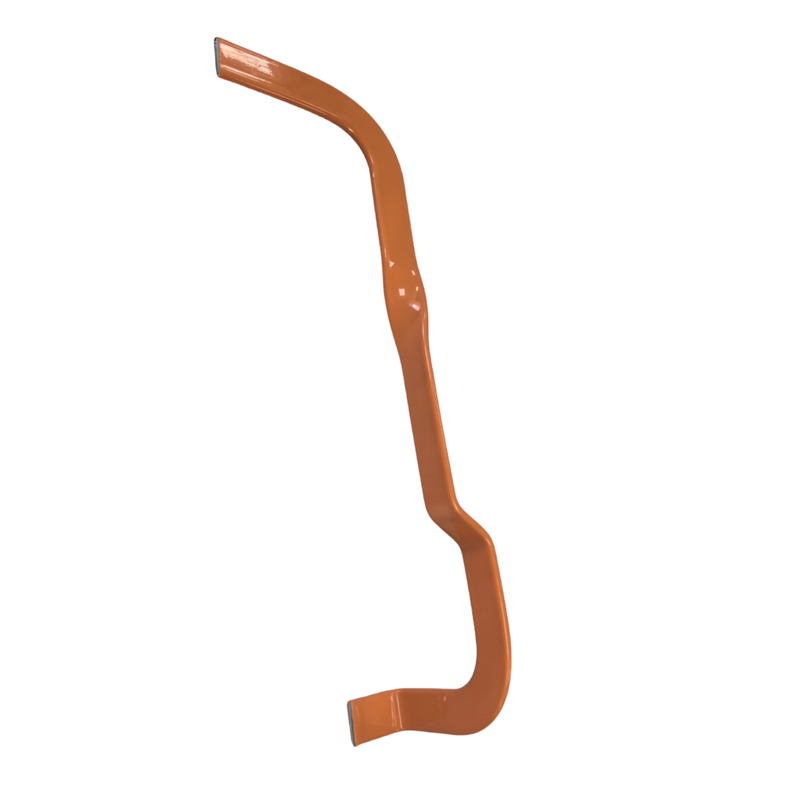
Flexible Laminated busbars for Vibration-Prone Environments
EVs and mobile energy storage units are usually in constant states of shock, vibration, and thermal fluctuations. With rigid busbars, mechanical shock can be transmitted from one connection point to another, potentially stressing the entire electrical system. With the vibration of mobile systems, such an issue can cause damage and long term reliability problems over time. A flexible busbar, made of multiple thin laminations of copper or aluminum stacked together—absorbs mechanical movement, allowing less shock and vibration to transfer across connection points. They are widely used to link battery cells to various control components like contactors and fuses, and in cases where movement is unavoidable in the components they connect. Flexible busbars also reduce the quantity of heavy, bulky wiring often found in many designs, which can aid in better air flow for cooling as well as reduce the system’s weight. Our flexible busbars at Kinto are carefully designed to the specific needs for space within the electric vehicle’s battery pack while remaining efficient with electrical resistances and thermal properties.
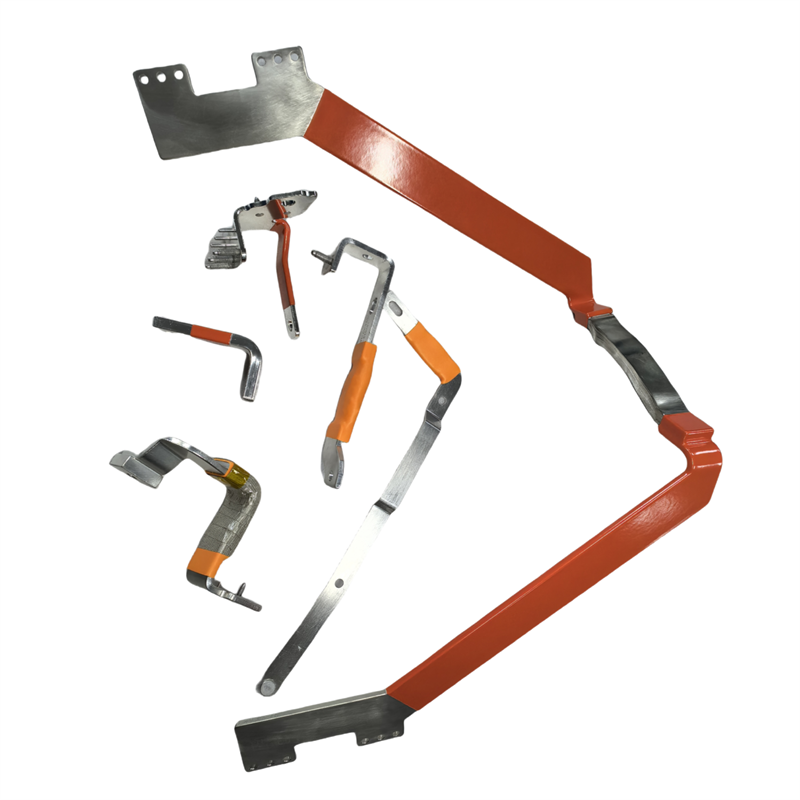
Insulated busbars for Safety and Space Efficiency
As we push operating voltages up, finding enough spacing between the busbars so that an arc can’t form and cause a short circuit turns into a real packaging and safety challenge. Applying insulating layers to the busbars, or using insulating busbars is a fantastic solution to this. They cover up the conductor surfaces, and are the smallest practical possible creepage and clearance spaces allowable by your design voltage and operating temperatures, whether the insulating layers are applied using epoxy powder coatings, film such as PET, or heat shrink sleeves. Also necessary to prevent unwanted foreign matter like dust and moisture coming into contact with conductive material, or for avoiding accidentally touching a conductive part during servicing, they can be commonly found next to one another, on a bus battery disconnect switch, power distribution, or power distribution junction box. They are also manufactured precisely, to just present the required connections for easy assembly.
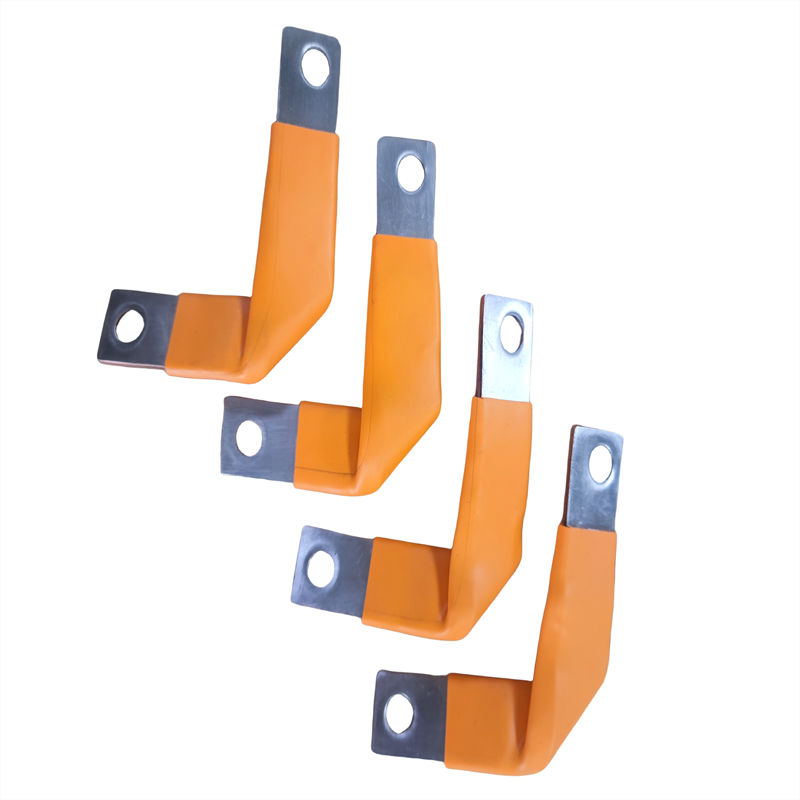
Laminated busbars for Low-Inductance Power Distribution
This advanced design utilizes alternating layers of conductors separated by thin dielectric insulators and all laminated together into a solid composite assembly. It offers very low parasitic inductance which is critical when utilizing silicon carbide and gallium nitride power electronics in modern EV inverter and chargers at higher frequencies and powers. This design reduces voltage spikes during switching, as well as overall switching losses and electromagnetic interference, improving system efficiency and enabling more predictable power delivery. Laminated busbars offer an incredibly compact power delivery system, replacing large wires and connectors, all in a flat component that provides all necessary connections. Common use cases are in the main DC link between a battery and an inverter, or to interconnect power electronic stages in a high-power energy storage converter. The engineers at Kinto have successfully implemented custom laminated busbars that achieve exact capacitance and impedance targets which will improve any system’s power delivery characteristics.
Choosing the right busbar requires consideration of electrical, mechanical, and thermal constraints for the application in your EV or energy storage system. Rigid bars offer strength, flexibility addresses motion, while insulated bars add to system safety and reduce space needed, and laminated bars excel when power needs to be distributed at high frequencies. Every busbar that comes from Kinto adheres to the ISO 9001 and IATF 16949 certifications, so each and every product will meet the strictest quality and performance criteria. Whether you are developing a brand new battery pack, a new drive inverter, or simply a stationary storage rack, the choice of busbar will affect many of your system’s properties, including cost, assembly, and ultimately electrical performance.