EN
 AR
 BG
 HR
 CS
 DA
 NL
 FI
 FR
 DE
 EL
 HI
 IT
 JA
 KO
 NO
 PL
 PT
 RO
 RU
 ES
 SV
 CA
 TL
 IW
 ID
 LV
 LT
 SR
 SK
 UK
 VI
 SQ
 HU
 TH
 TR
 FA
 MS
 GA
 LA

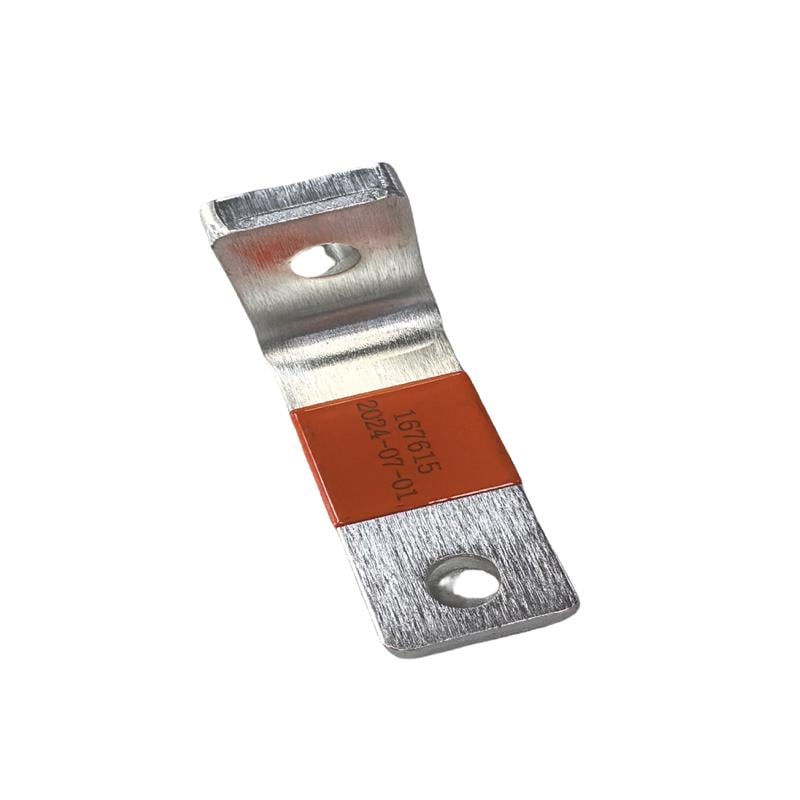
What Kind of Busbar Fabrication Can Meet Strict Automotive Tolerance Requirements?
In the rapidly changing world of transportation, electric vehicles, hybridization, and driver assistance technology represent a huge paradigm shift for manufacturers and consumers. What connects the heart of these systems—batteries, inverters, and motors—and enables them to deliver significant electrical current? The busbar is an often-overlooked yet crucial component. Unlike busbar applications in industrial or commercial settings, automotive busbars require the ability to withstand a wide range of temperature differentials, significant vibration, and often restrictive packaging constraints. In addition to meeting demanding spatial tolerances—on the order of sub-millimeter—automotive busbars must provide a high degree of electrical reliability and be exceptionally fail-safe in their design and function. At Kinto, we have built our fabrication expertise to master the nuances of these tough automotive requirements, earning us a trusted place in the supply chain. Here, we dive into the process expertise and quality control necessary to achieve automotive-qualified busbar manufacturing:
Precision Stamping and Forming for High-Volume Consistency
Production planning on any of our automated automotive lines requires thousands of identical busbars day after day. For many components, tolerance requirements can reach ±0.05 mm on important outside contours and center holes. Achieving that repeatable accuracy requires our top-tier stamping and forming machines that use servo feeds, combined with precise die sets that are CNC ground by us to account for any wear. Our forming is usually done in progressive dies. In a single hit, our machines punch the holes, bend them, sometimes stamp them for tighter tolerance coining, or perform a final trim operation. That way, all the important features that you set up in relation to the starting strip will remain datums for every subsequent feature from front to back. Managing spring-back on every bend in our copper and aluminum alloys is an ongoing challenge. Before a forming die can even be produced, the individual bends are modeled in finite element analysis software. We use this simulation to analyze the plastic deformation of each individual piece and develop tool geometry that can compensate for the inherent material property of spring-back. This unique combination of high-rigor tooling, extremely accurate feed-rate control, and empirically proven springback knowledge allows us to produce formed busbars that drop cleanly into fixtures without requiring any forcing.
High-Precision Machining for Complex Geometries
Stamping has its merits, but it is limited to flat and shallowly contoured busbars. Many busbars in automotive applications require detailed features that are impossible to achieve with stamping dies alone. These include counterbores up to 12.7 mm deep, angled holes, threaded through-holes without tapped bottoms, and sections with varying thickness, all designed to balance current-carrying capacity with weight optimization. To produce these components, we deploy our state-of-the-art CNC machining centers, equipped with rigid frames and fine-step servo motor control systems that ensure positional accuracy to ±0.01 mm.
Our machining is driven by intelligent code that follows an adaptive path, ensuring uniform material removal per cycle and reducing cutting forces to prevent deformation of thin-walled features. The use of through-spindle coolant and optimized tool coatings minimizes friction and maintains dimensional stability over long production runs by avoiding thermal expansion effects.
Our fixturing concept uses precise mounting on pins or vacuum cups that remove the distorting effects of clamping on the busbar. All features from hole dimensions to contact areas on both ends of the part conform to these tight standards, as expected in automotive power electronics applications.
Advanced Measurement and In-Line Inspection Systems
Building busbars to close tolerances is only half the challenge. What‘s just as difficult, if not more so, is assuring each piece is within specification without hampering production output. At Kinto, we’ve equipped our production lines with in-line inspection machines that provide non-contact, real-time dimension measurement at line speed. Using laser triangulation with high-resolution cameras, our systems measure critical dimensions immediately after they are formed or machined, employing sophisticated algorithms that assess each piece against its CAD geometry on the fly. If deviation exceeds acceptable tolerance ranges, the part is automatically rejected, with an alert that notifies our production engineers to assess for tool wear or material discrepancies. For more critical components and first-article approval, a fully equipped metrology lab includes coordinate measuring machines that offer touch probing and vision-based measuring to verify each characteristic. Regular Gage R&R studies are completed to ensure the reliability and consistency of our measurement instrumentation and personnel. With layers of inspection, including machine-integrated, on-line, and off-line measurement processes, we‘ve developed multiple layers of assurance to help ensure accurate parts, every time.
Material Selection and Surface Finish Control
Tolerance isn’t only dimensional; it‘s how the physical makeup of the material behaves under environmental stresses and the characteristics of the surface that influence electrical interface and corrosive durability. Because automotive busbars often carry very high current levels, a significant amount of heat is generated, which can degrade the mechanical properties of both copper and aluminum alloys over time. Kinto partners closely with approved mills to procure busbar stock in a uniform temper, grain structure, and electrical conductivity in order to assure repeatable performance from our forming and machining processes from lot to lot. We’re also vigilant of edge condition and burr height, as razor-sharp burrs can compromise the insulation layer or distribute clamping force unevenly across the busbar footprint. Our deburring stations utilize both mechanical brushing and chemical smoothing processes, rounding and burnishing the busbar‘s edges to within specified radii. For busbar surfaces, particularly those directly engaging cooling plates or thermal interface material (TIM) for effective thermal transfer, we specify and control the tool path and cutting parameters to establish roughness values that balance low contact resistance with sufficient frictional support. For busbars requiring tin or nickel plating, Kinto specifies precise thickness tolerances and adhesion criteria, verified through incoming inspection, because just a few microns’ variation can significantly shorten the service life of the electrical connection, especially under vibration and thermal cycling of vehicle environment.